

In ABA, we spend a lot of time teaching skills to our learners that we can see and measure: communication, daily living, social interaction, cooperation, and emotional regulation. But woven through almost all of those skills is something deeper: the ability to adapt. To shift. To step back for a moment and choose a helpful next step instead of reacting automatically.
That broader skill is called psychological flexibility, and it’s one of the most powerful tools we can help clients develop. It’s also one of the most important skills ABA clinicians can build for themselves.
Psychological flexibility comes from Acceptance and Commitment Training (ACT), and at its core, it refers to the ability to stay present, notice thoughts and feelings without getting swept away, and take actions guided by personal values. In other words: “I can feel uncomfortable and still choose something helpful.”
It’s simple to describe, but incredibly meaningful in practice – especially for the individuals and families we support.
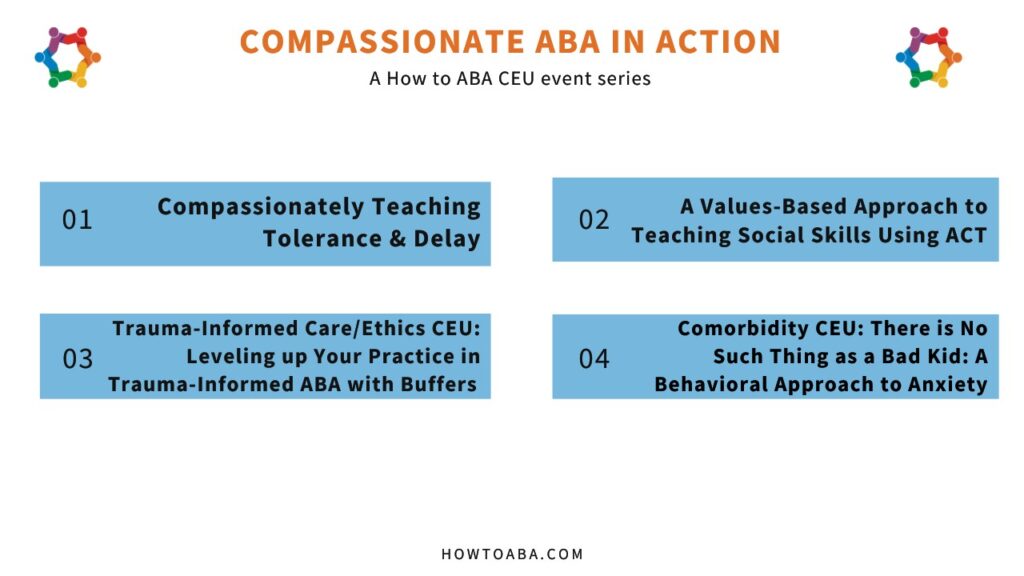
Upgrade your ABA practice with this exclusive 4-CEU bundle designed to help you implement compassionate, trauma-informed strategies while earning CEUs at an incredible value!
Why Psychological Flexibility Matters for Clients
1. It supports real-world coping, not just compliance
Traditional reactive strategies – like “take a deep breath,” “use a calm-down tool,” or “ask for a break” – are useful, but they often rely on perfect conditions. Life doesn’t always offer those conditions.
Psychological flexibility teaches something more sustainable: I can experience frustration, anxiety, disappointment, or uncertainty, and still move toward what matters to me.
For learners with autism or developmental disabilities, this opens the door to:
- Tolerating change and transitions
- Handling mistakes or unexpected events
- Letting go of rigid rules
- Moving through difficult emotions
- Trying new activities even when they feel scary
Instead of trying to eliminate uncomfortable feelings, which isn’t realistic, we help clients build the ability to navigate them.
2. It reduces the struggle with “big feelings”
Many of our clients experience emotions intensely. When difficult feelings show up, they might escape, avoid, engage in repetitive behavior, or shut down. Teaching psychological flexibility offers them alternatives.
A child who feels anxious about a math worksheet might learn to notice, “My chest feels tight. I’m having the thought that this will be too hard.” That simple noticing step often reduces the emotional “stickiness” that leads to escalation.
When clients can name what’s happening internally without judging it, they gain space to choose a more effective action.
3. It connects behavior goals to personal meaning
Sometimes, teaching new skills can feel removed from the client’s lived experience. ACT reframes that. We help clients understand why a skill matters in the context of their own values – not just because the adults around them want compliance.
For example:
- “I work on conversation skills because connecting with my cousin is important to me.”
- “I practice flexibility because I want to try new things with my friends.”
- “I use coping strategies because being kind to myself matters.”
When skills serve a purpose clients care about, motivation becomes more natural and less externally driven.

Why Psychological Flexibility Matters for Clinicians, Too
The truth is, ABA work is meaningful, but it can also be emotionally heavy. Flexible thinking isn’t just good for clients; it’s essential for us.
1. It Prevents Burnout
Clinicians who practice psychological flexibility are better able to:
- Notice their own stress signals
- Respond rather than react
- Accept that some days won’t go as planned
- Let go of perfectionism
- Stay connected to why they chose this field
Perfectionistic expectations – ones many of us quietly carry –can make everyday challenges feel like personal failures. ACT helps clinicians shift toward curiosity:
“That didn’t go as expected. What matters most here, and what’s my next workable step?” This mindset reduces burnout and increases professional resilience.
2. It Strengthens Rapport and Compassion
Working with clients who display challenging behavior can stir up frustration, worry, or self-doubt. Psychological flexibility gives clinicians the space to recognize those feelings without letting them take over.
Instead of reacting to stress, clinicians can respond with:
- Empathy
- Patience
- Perspective
- Creativity
Clients feel that shift, and it makes intervention more effective.
3. It Improves Clinical Problem-Solving
A flexible clinician can:
- Pivot when a plan isn’t working
- Try new approaches instead of repeating old ones
- See behavior through the lens of the client’s experience
- Adjust expectations based on context
- Make room for neurodiversity-affirming practices
Behavior isn’t static, and neither should strategies be. The ability to shift without judgment is a hallmark of high-quality intervention.
Upgrade your ABA practice with this exclusive 4-CEU bundle designed to help you implement compassionate, trauma-informed strategies while earning CEUs at an incredible value!
How to Start Teaching Psychological Flexibility
Teaching psychological flexibility doesn’t require an overhaul of your programming. Small, consistent practices make a big impact. Here are some ways to integrate ACT concepts into daily sessions:
1. Practice Noticing Feelings and Thoughts
Use simple language:
- “Your face looks tight – maybe you’re feeling worried?”
- “You’re having the thought that you can’t do this. Let’s notice that thought together.”
The goal isn’t to challenge or replace thoughts, just to become aware of them.
2. Label Internal Experiences without Judgment
Instead of “bad feelings,” try:
- “Tough feelings”
- “Sticky thoughts”
This creates psychological distance.
3. Teach Willingness Instead of Avoidance
Help clients learn:
- “I can feel nervous and still start my homework.”
- “I can feel upset and still ask for help.”
Willingness is a skill that grows over time.
4. Connect Goals to Values
Try asking:
- “Why does this matter to you?”
- “How does this help you be the kind of person you want to be?”
When clients can verbalize their own values, behavior change becomes more meaningful.
5. Model Flexibility as a Clinician
If a plan fails, narrate: “That didn’t go how I expected. Let’s try another way.” Your modeling becomes a living lesson.
Psychological flexibility is a life skill – one that supports emotional well-being, resilience, and independence. Our learners benefit when they learn to make space for discomfort and keep moving toward what matters. Our clinicians benefit when they do the same.
In ABA, we aim to build skills that help clients thrive long after we’re gone. Psychological flexibility might be one of the most important of those skills – not because it eliminates challenges, but because it empowers people to face them with courage, clarity, and choice.