Skip to content

ABA training

ESDM in Action: Embedding Goals in Daily Routines and Play

Episode 221: ESDM in Action: Embedding Goals in Daily Routines and Play

What does it look like to take developmental goals off the page and bring them to life during play, snack time, or cleanup? That’s the beauty of the Early Start Denver Model (ESDM). In this conversation, we explore how natural routines create powerful learning opportunities without forcing children to stop playing or sit at a table.

More Than a Checklist: How to Make a Powerful ABA Assessment

Episode 220: More Than A Checklist: How to Create a Powerful ABA Assessment

An ABA assessment is more than a form to complete or boxes to tick. It is the foundation for building programs that truly matter to our learners. In this conversation, we unpack how to move beyond surface-level evaluations and use assessments as powerful tools for understanding strengths, identifying gaps, and setting meaningful goals.

Assessments

Episode 219: Choosing the Right Assessment: Practical Tips for BCBAs

Assessments are essential in ABA, but are we always using them the right way? Too often, they become a box-checking exercise rather than a true guide to meaningful intervention. In this conversation, we revisit the foundations of ABA assessments and explore how to move beyond simply filling in grids and scoring sheets.

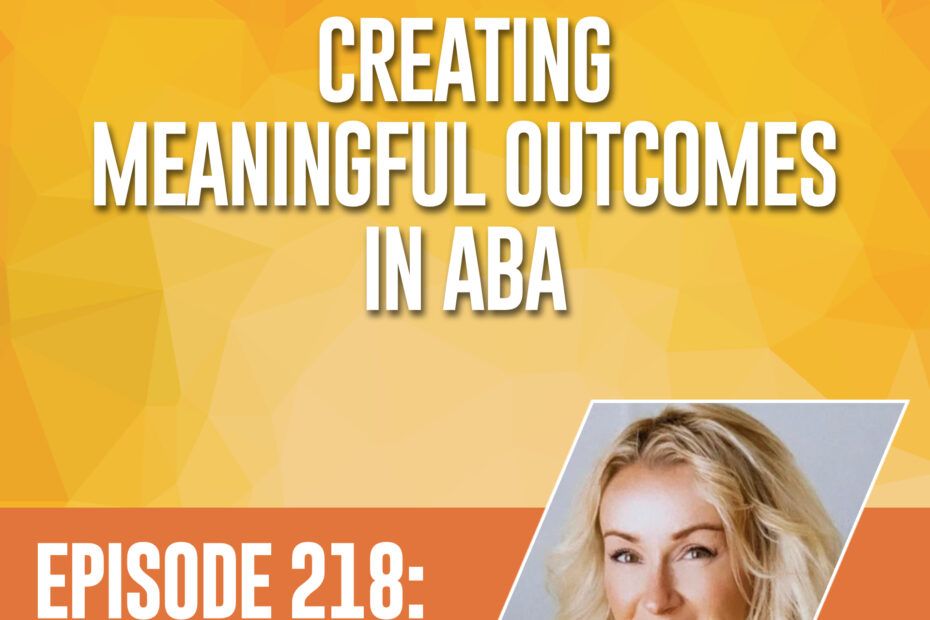
Creating meaningful outcomes in ABA.

Episode 218: Creating Meaningful Outcomes in ABA with Dr. Anika Hoybjerg

Dr. Anika Hoybjerg is the CEO of ABA Education Center and co-creator of The MOTAS assessment, a comprehensive assessment tool designed to build independence and support meaningful outcomes for learners of all ages. In this episode, we explore her inspiring journey in the field and the innovations she is bringing to ABA.

noncompliance

Episode 214: Rethinking “Noncompliance”: Behavior or Bias?

Is noncompliance really the problem, or just a reflection of our own expectations? Here, we unpack one of the most overused and misunderstood terms in ABA. We explore why this label can mask important context, such as unmet needs, skill deficits, or valid self-advocacy.