
Event Type Public
March
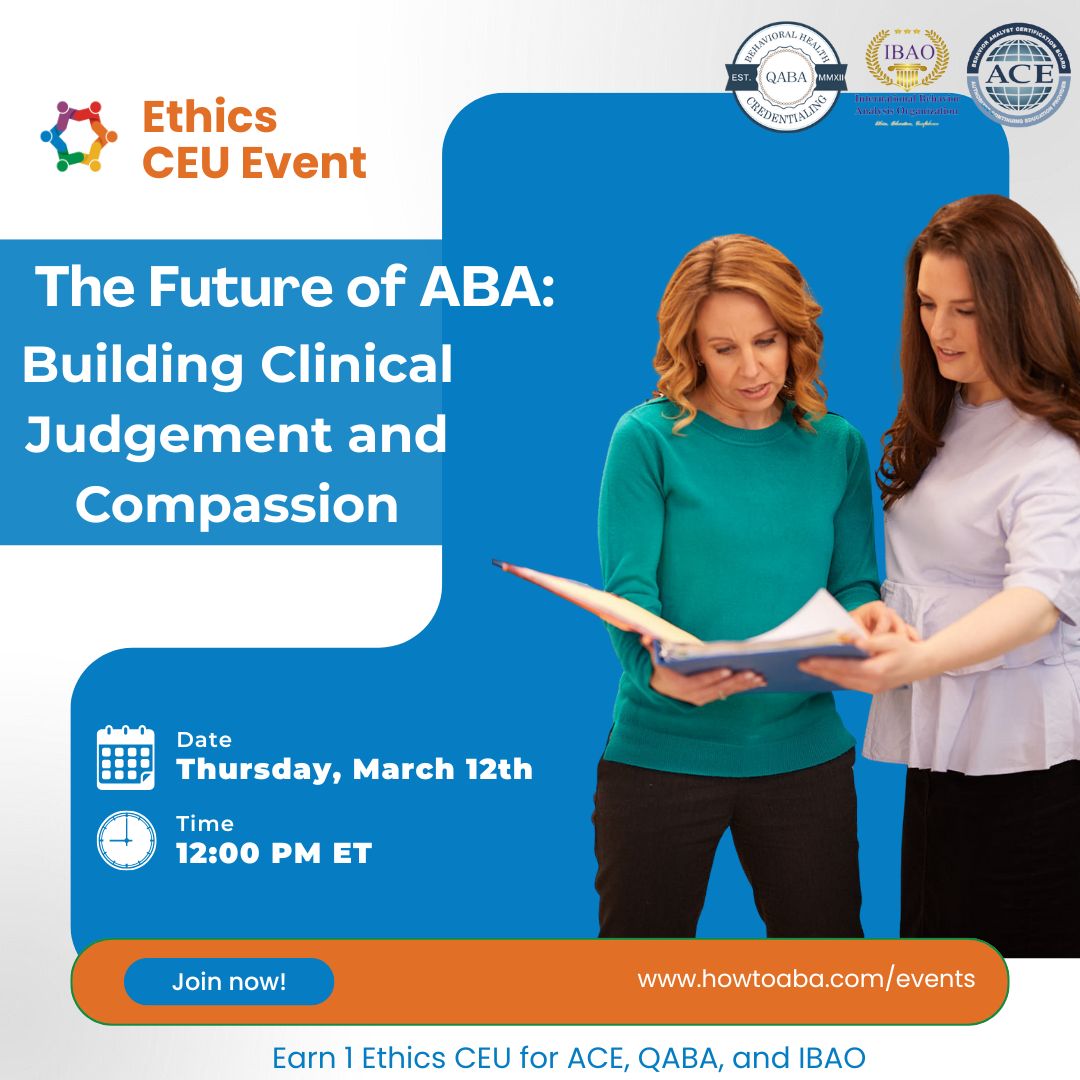
12Mar12:00 pm1:00 pmEthics CEU: The Future of ABA: Building Clinical Judgement and Compassion
Event Details
Earn 1 Ethics CEU for ACE, IBAO, or QABA Presented by BCBA Shayna Gaunt As the field of Applied Behavior Analysis continues to evolve, BCBAs are being called to go beyond rigid
Event Details
Earn 1 Ethics CEU for ACE, IBAO, or QABA
Presented by BCBA Shayna Gaunt
As the field of Applied Behavior Analysis continues to evolve, BCBAs are being called to go beyond rigid protocols and develop strong clinical judgment grounded in ethics, compassion, and evidence-based decision making. This Ethics CEU explores the future of ABA through a modern, human-centered lens, focusing on how behavior analysts can balance data, context, and individual needs while maintaining professional and ethical standards. Participants will examine real-world scenarios, discuss common ethical challenges, and learn practical strategies to strengthen compassionate care, critical thinking, and responsible clinical decision-making across settings.
By the end of this presentation, participants will be able to:
- Identify ethical considerations that arise when applying clinical judgment beyond standardized protocols or procedures.
- Describe how compassionate, individualized decision-making aligns with the BACB Ethics Code and supports socially valid outcomes.
- Apply practical strategies to evaluate complex clinical situations using ethical reasoning, contextual variables, and evidence-based practices.
Time
(Thursday) 12:00 pm - 1:00 pm
April
23Apr12:00 pm1:00 pmCEU Event: Managing the Mayhem: Supporting Busy Classrooms and Group Settings

Event Details
Earn 1 Learning CEU for ACE/QABA, 1 General ABA Topics CEU for IBAO Presented by BCBA Shira Karpel Group settings can feel chaotic, but behavior analysts have tools to bring calm to
Event Details
Earn 1 Learning CEU for ACE/QABA, 1 General ABA Topics CEU for IBAO
Presented by BCBA Shira Karpel
Group settings can feel chaotic, but behavior analysts have tools to bring calm to the mayhem. This CEU integrates evidence-based ABA strategies to help teams manage classrooms with compassion and structure. Ideal for BCBAs and educators in schools or center-based programs.
Learning Objectives:
- Identify consistent strategies that support classroom-wide regulation and behavior management.
- Train staff to implement behavioral supports with fidelity in group settings.
- Design group-based supports using function-based ABA strategies.
Time
(Thursday) 12:00 pm - 1:00 pm
May
Event Details
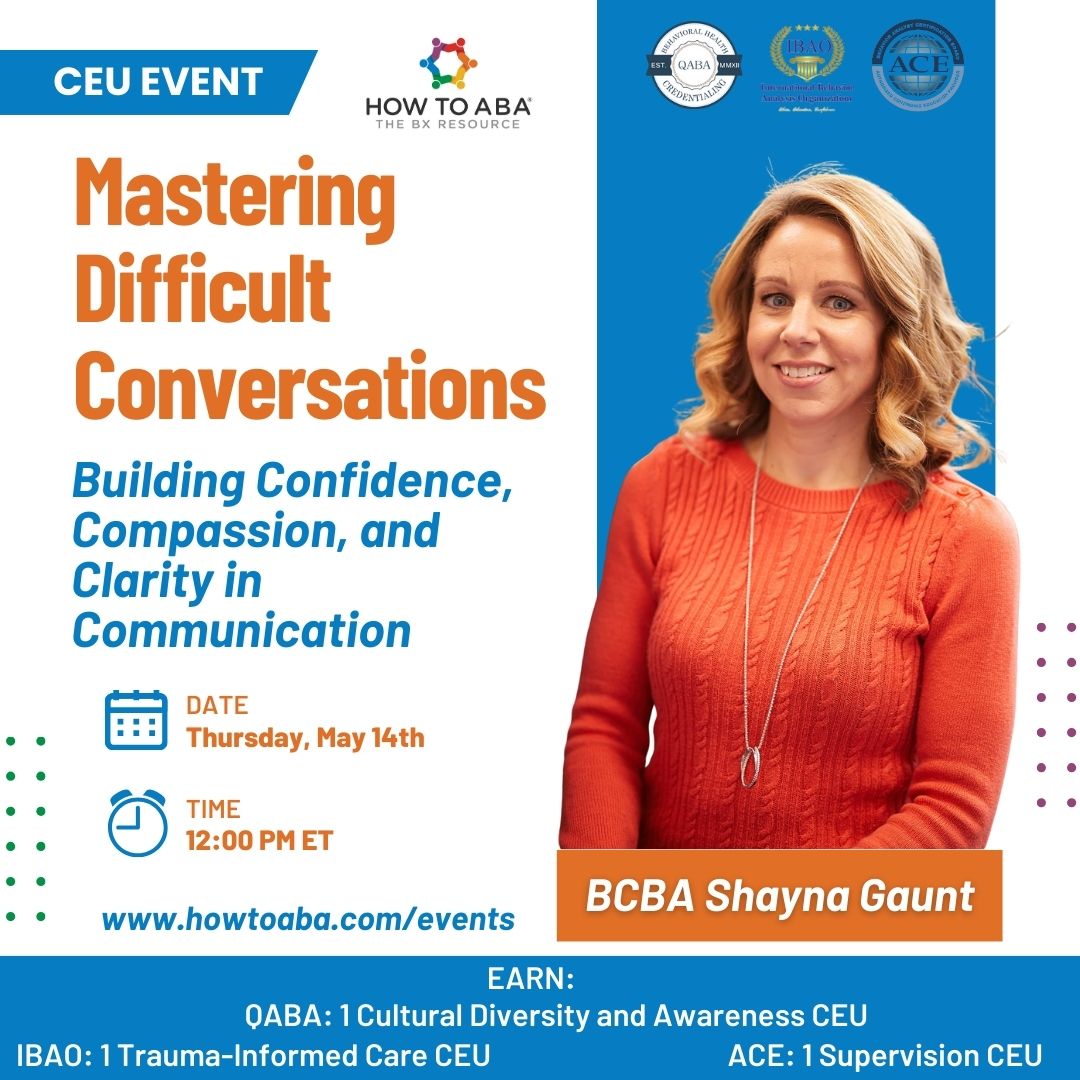
Earn 1 Supervision CEU for ACE, 1 Trauma-Informed Care CEU for IBAO, or 1 Cultural Diversity and Awareness CEU for QABA Presented by BCBA Shayna Gaunt Whether it’s providing feedback to a
Event Details
Earn 1 Supervision CEU for ACE, 1 Trauma-Informed Care CEU for IBAO, or 1 Cultural Diversity and Awareness CEU for QABA
Presented by BCBA Shayna Gaunt
Whether it’s providing feedback to a supervisee, collaborating with a classroom teacher, or discussing sensitive topics with parents, difficult conversations are part of every behavior analyst’s professional life. Yet, even the most skilled practitioners can feel uneasy navigating these moments.
In this CEU, we’ll explore the art and science of effective communication—how to approach challenging discussions with empathy, clarity, and professionalism. We’ll discuss how trauma-informed care principles can guide these interactions, ensuring communication is safe, supportive, and sensitive to past experiences. We’ll also examine how cultural diversity, communication styles, and personal lived experiences influence how messages are shared and received. Learn strategies grounded in behavioral principles and organizational psychology to prepare for, initiate, and guide conversations that lead to understanding and positive outcomes. You’ll also discover how to teach and model these skills for others, helping your team build confidence, compassion, and cultural humility in communication.
Learning Objectives:
- Identify common barriers to effective communication in supervisory, parent, and interdisciplinary relationships, including trauma-related and cultural factors.
- Apply evidence-based strategies for conducting difficult conversations using behavioral, trauma-informed, and culturally responsive principles.
- Teach and model effective communication skills to supervisees and team members to promote a culture of psychological safety, openness, and collaboration.
Time
(Thursday) 12:00 pm - 1:00 pm